I have been talking about my writing journey on my way to publication, and today I want to focus on that thorny topic for many aspiring novelists – agents. I’ve been in the query trenches, and I have been wounded, again and again, by the rejection letter. I know what it is to feel that near desperation to get an agent on board.
Agents are seen as something like the holy grail for many writers desperate to get published. ‘If I could only get an agent’ the mantra for many of us with completed manuscripts. We know our work is good. And here is the thing. Your work is good. In fact, it may be the greatest work of genius ever created since Dickens wrote Bleak House. But that doesn’t necessarily mean that your book is publishable in present market conditions. And agents won’t take a book on if they think they cannot sell it, no matter how brilliant it is.
I have submitted my novels to many agents. I have always been met with a rejection – that is, if I got a response at all. It’s hard not to feel irritated or resentful when you spend hours upon hours crafting a tailored submission package for each agent you submit to, or to begin to feel that agents are some sort of hideous gatekeeper, like Heracles guarding the threshold of Olympus, refusing to let anyone other than a select through pass through into the world of being published. But as writers, you have to harden yourself to rejection. It is a necessary part of the process. And you also have to remember that agents can only take on so many writers, and they don’t owe you anything.
Comments I have had in some of the rejections I have received have actually been quite helpful and uplifting, once you get past the initial sting of rejection. Here are a few examples:
- You are a good writer, but after careful consideration…
- This is really well written, and clearly well researched, but…
- After careful consideration, I am sorry to say that this is not right for me – it’s an interesting idea and you’re a good writer, but…
- I am sure that this could be very intriguing but…
- We have enjoyed reading it, but…
The but is the word that is always the killer, but…
It is important to know that getting an agent is no guarantee of success. I spoke to one novelist recently who despite having an agent, was yet to secure a publisher for her book. It also might be reassuring to know that you don’t necessarily need an agent to become published. There are many ways to become a published author, and not all of them necessitate having an agent.
As a writer, sometimes, you have to become your own advocate, your own champion, and submit your work direct to publishers who welcome submissions from unagented writers. There are many of them out there, particularly independent or regional publishers like Galley Beggar, Northodox, or my own publisher Bloodhound Books. And you can also self-publish. Some of the most successful authors today are ones that self-publish.
I want to acknowledge that I have had many positive interactions with agents over the years when meeting with them, whether in agent one-to-one sessions during festivals or during writing workshops. I have had some good advice on my query letter, how to better pitch my novel when trying to secure an agent, and even some constructive feedback on my opening chapters. Agents can provide a positive and informative service for writers generally, even if they choose not to represent you individually. And I’m genuinely happy for writers I follow on social media when they announce that they are agented. It gives the rest of the #writingcommunity hope. But not getting an agent is not the end of your author dreams.
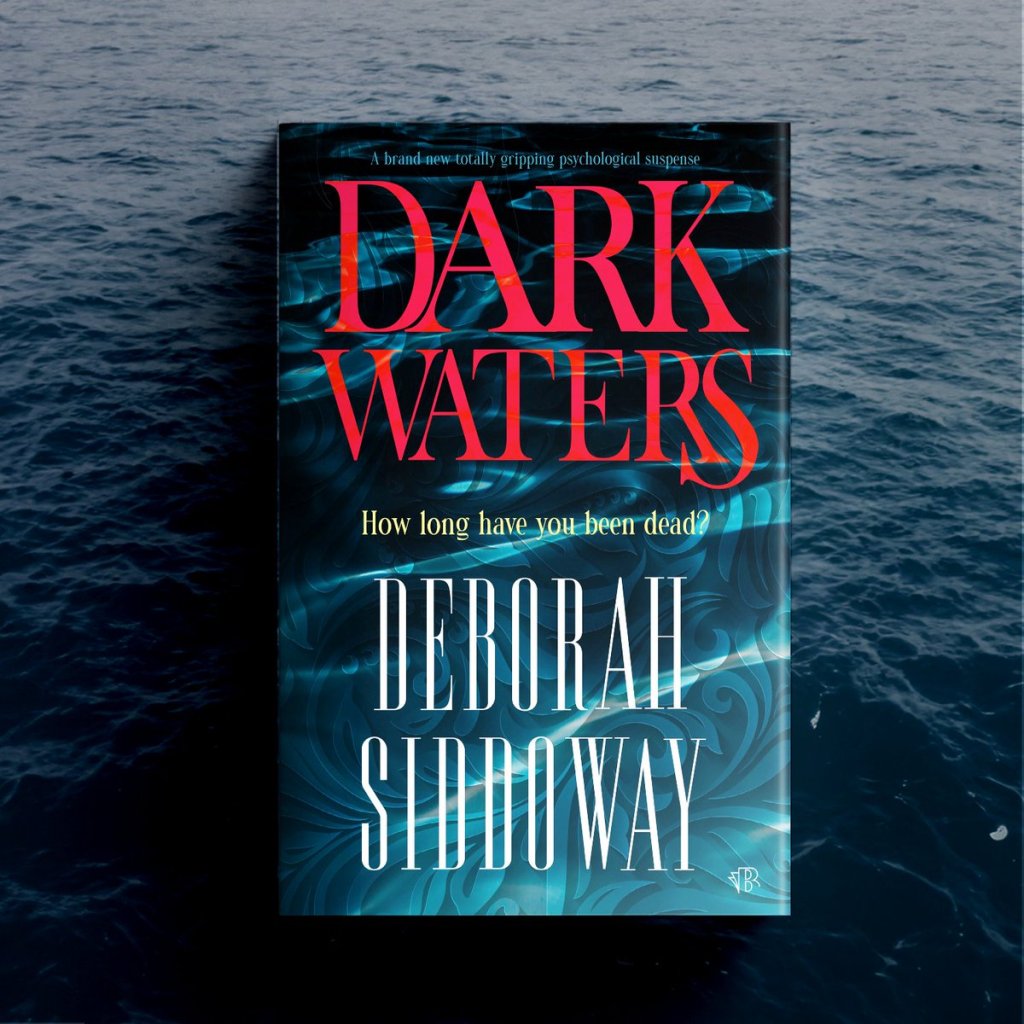
I didn’t have an agent when I secured publication for Dark Waters. And the reason I wanted to write about agents today is that I want all writers out there, whether they are the ones currently in the query trenches, or obsessively watching their inbox for a reply, or exhausted and battle-weary from rejection after rejection, to have hope.
My novel is being published tomorrow with Bloodhound Books. I can’t wait to share it with you.
 Deborah Siddoway
Congratulations Deborah!💕 and thank you for sharing!
LikeLike
And yess please share it!The enlightened Bookworm
LikeLike
Congratulations! I really enjoyed reading this!! Totally understand. I am querying agents now for my second novel but my first novel “The Bayou Heist” was published by Barringers. I will buy your book and am looking forward to hearing more stories from you. I hope you follow me as I have some interesting tidbits. Congrats!
LikeLike
Hi Deborah, I agree that having an agent can be viewed as an absolute necessity to publication but I would like to offer another perspective. As you know, I recently self-published a newly-illustrated edition of Dickens’s BLEAK HOUSE. I of course went through the routine of querying dozens of agents, all to no avail, as BH is in the public domain, and there are no agents to rep an illustrator of anything other than childrens’ books.
I’m retired, having been a commercial illustrator in the NY market for about 40 years, and I’ve developed numerous and varied projects over the years. My wife Vicki Lynn Mooney is a playwright and has had productions in New York and in Oklahoma City.
In the course of our careers, we have had, I’m guessing, about eight agents for our many projects, and I would like to say that NOT ONE OF THEM ever accomplished a damn thing for either one of us. I did get a couple of $300 advances (accompanied by completely incomprehensible sales statements) for some posters I designed back in the 90s, but frankly we found that agents are completely useless unless you are already successful.
In one instance, I had a chat with a successful cartoonist for the New Yorker (the holy grail for cartoonists!) and asked him frankly how to get agent. What he told me verbatim was, “First, publish a best-seller, then you can get an agent!”
Agents are in the business of managing business for successful authors. It’s not their job to develop your career. This is a brutal truth that must be confronted.
LikeLike