In my last post I spent time talking about the writing of my first novel, and my failure to achieve publication. My use of the word failure in this context was one that I carefully considered, for while I failed to find anyone willing to support it for publication, whether that be an agent or a publisher, I don’t consider that the novel itself was a failure.
For that novel, the one I agonised over, spent years carefully crafting, editing, and over-thinking, taught me much of what I needed to know to become a novelist. So, I don’t see it as a failure. I see it as a necessary learning tool on my pathway to publication, including when to accept that a novel is not right, at least for now, to let it go, and to move on to the next project. Failure is only a failure if you let it stop you from moving forward.
And moving forward sometimes means thinking about writing in a different way. Two things I utilised to work on the craft of writing were undertaking courses, and entering competitions, so I am going to talk a little bit about both in this post.
There is no doubt that writing a novel today has become commodified to an unprecedented extent, with a plethora of options available promising to help you achieve your writing dreams – at a price. While I could spend time arguing about the ethical issues around this, and the exploitation of the dreams of unpublished writers, as well as the barriers to access for many people, there is no doubt that courses do provide an invaluable tool to help build your toolkit as a writer.
Writing, like any other craft, takes dedication, study, and practice. No one expects a concert pianist to put on a mesmerising performance in the absence of years of study, and hours upon hours of practice. Similarly, writers need to work on their writing skills in order to produce the best work they are capable of, and courses can provide a structured way of doing that.
Courses, especially those that are conducted over a period of weeks or months, are brilliant for teaching you additional ways of thinking about the art of writing, as well as introducing you to a community of writers who work with you, in a collaborative way, to critically examine what you have written. As a short aside, I have to say that the writing community is one of the most joyful aspects of being a writer. It is a supportive, encouraging, and sympathetic space for you to talk with like-minded people about the many obstacles and joys writers encounter during the writing journey.
The thing to remember though, is that while many of these courses do offer access to agents and publishers, it doesn’t mean that you will find an agent, a publisher, or even get your novel noticed. This doesn’t, however, diminish the value a reputable course can offer.
I mentioned briefly, the self-edit course with Jericho Writers that I undertook while writing my (still) unpublished novel. I want you to know that while I may not have achieved publication with that novel, the skills I learned while editing it for the course were ones that I imported into the writing of Dark Waters – thinking about the importance of voice, narrative point of view, psychic distance in my writing as I was writing, making Dark Waters not only easier to write, but also a much better, stronger novel for it.
One of the other courses I have done recently has been the Curtis Brown Creative course Writing Fiction with Kate Mosse. This was a course I decided to do after being a runner up in the CBC monthly challenge, which asks participants to write a mini-scene in response to a prompt on X/Twitter. It is always a fun writing exercise, and I would encourage any writer to check it out (check out last month’s challenge here: https://www.curtisbrowncreative.co.uk/blog/write-cbc-tip-and-task-from-lucy-holland). Being runner-up bagsed me a discount on one of their many courses. I chose the Kate Mosse course because I adore her books, and her evocative writing style, and the opportunity to workshop some of those concepts with other writers again proved invaluable, particularly in thinking about the sense of place in my novels.
I briefly want to talk about competitions, as I also saw them as a useful tool. There are a lot of novel competitions out there, especially for unpublished novelists, and I have entered many of them, thinking that if I could only get longlisted, I might have a chance of getting my novel noticed. The difficulty with competitions, is that for many unpublished novelists, the entry fee represents a significant barrier. While many competitions do have bursaries, there are only a limited number, and even if you are in a position to pay the entry fee, realistically, the chance of your novel being noticed is slim, your novel but a tiny crystal of salt in a wide and ever-moving ocean.
Leaving that aside, the art of preparing your opening chapters for consideration in a competition, and the way in which this teaches you to critique your own work, can be a useful tool in improving your skills as a writer. Me, I have never been successful in any novel competition I have entered. But… I didn’t let that stop me. After all, I don’t like every novel I read, and I have certainly read competition winners where I didn’t understand why THAT novel had been chosen above others which I considered to be much better.
Remember, when it comes to achieving publication, it only takes one person to love your book, one person to champion your story, one person to say yes. It might take some time, but if you keep working, and keep dreaming, one day you will find that one person who says yes. Bloodhound Books said yes to Dark Waters. It is available to pre-order now. https://amzn.eu/d/cUz0Kq6
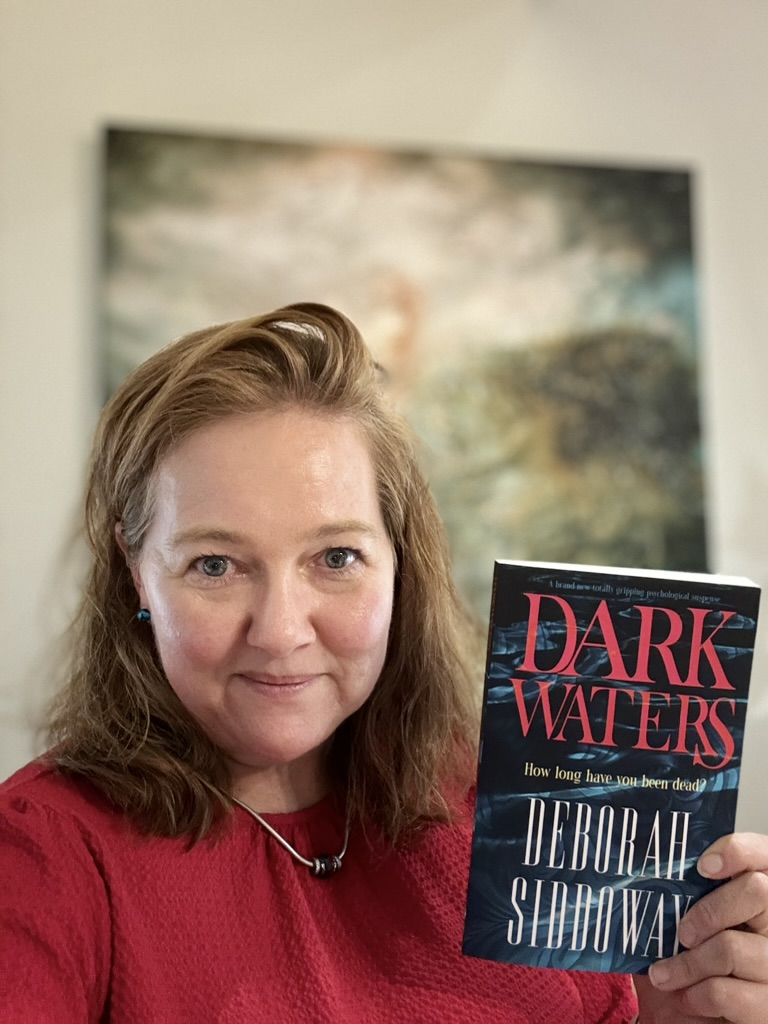
 Deborah Siddoway